Week 11
In the lab, we learned about the Law of Superposition. Law of Superposition is the idea that the lower the layer, the older it is. This means that the higher the layer the younger it is! Another thing we did in the lab was looking through microscopes at different kinds of sand. We had to observe the sand's characteristics, and then decide whether we thought the sand was created through water, wind, or glaciers. We did get a few wrong, but to our defense our microscope was acting kind of funky! This was fun and very hands on, and going over it as a class was very eye opening.

In lecture, we learned more about geodes. We were comparing rocks and trying to decide whether they were hollow or not. Then, we did an experiment about whether the different pops would sink or float. The root beer did not float, and this is because it is more dense than water. If we were to add salt, we could add salt until it made the root beer float. We then tested this with multiple pops, and had to guess whether we thought it would sink or float. The only pop that did not sink was the Diet Coke because it has no sugar. This all leads to the idea of buoyancy.
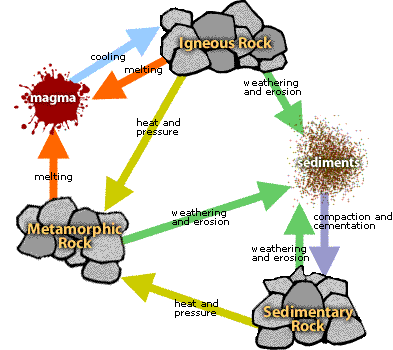
What I took away from the press book reading this week was more about the different kinds of rocks. This then led to me reading more about the rock cycle. The rock cycle is when each type of rock- igneous, sedimentary, metamorphic- turns into one another through heat, pressure, erosion, or weathering. I find the rock cycle to be very intriguing because any of the rocks can change into one another just by undergoing a transformation through the rock cycle. I then read further into the different types of weathering (mechanical and chemical), and the difference between weathering and erosion. The key takeaway "Weathering is the making the mess and Erosion is cleaning it up" really helped me clarify the difference between the two and their jobs in the rock cycle.


Comments
Post a Comment